Arkshel Robotics Unveils MX01 Transformable Flying Humanoid
New Shenzhen startup demonstrates humanoid, quadruped, and aerial modes with autonomous flight-module docking

Arkshel Robotics, a newly established Shenzhen startup, has released the first public demonstration of its MX01 prototype, a transformable platform designed to switch between humanoid, quadruped, and aerial configurations. The company, founded only weeks earlier in July 2026 and based in Nanshan district, positions the system as an early attempt at a multi-modal robot capable of adapting its form to different terrain and mission requirements without requiring separate specialized machines.
In humanoid mode the MX01 is intended for dexterous tasks that benefit from a human-like form factor and upper-body manipulation. In quadruped configuration it prioritizes multi-terrain mobility and stability over uneven ground. When obstacles cannot be traversed on the surface, a separate heavy-lift flight module approaches, docks autonomously using visual ranging and attitude sensing, and lifts the robot into the air, allowing it to clear barriers before landing and folding its rotors to restore ground mobility.
The flight module draws on the mature industrial-drone supply chain that has long been concentrated in Shenzhen. Autonomous docking and takeoff are presented as core capabilities of the current prototype, with the company stating that no human intervention is required once the docking sequence begins. A wheeled mode for higher-speed transport and heavier payloads is listed as under development for a future release.
Arkshel describes the MX01 as an initial prototype whose final appearance and mechanical structure may still change as testing continues. The company has completed a seed funding round with backing from CDF Capital and Hengqin IDC and has opened pre-orders while continuing refinement of the transformation mechanisms and flight-docking reliability.
The concept sits at the intersection of metamorphic robotics research and practical multi-environment deployment. If the docking, transformation, and flight sequences can be made reliable under real outdoor conditions, the platform could eventually serve inspection, disaster-response, or logistics roles that currently require multiple different robot types working in sequence.
Independent observers note that the MX01 remains at a very early stage. Sustained flight with a humanoid-scale payload, robust autonomous docking in wind or cluttered environments, and seamless mode transitions under operational loads will all need extensive validation before the system can move beyond demonstration footage into practical field use.
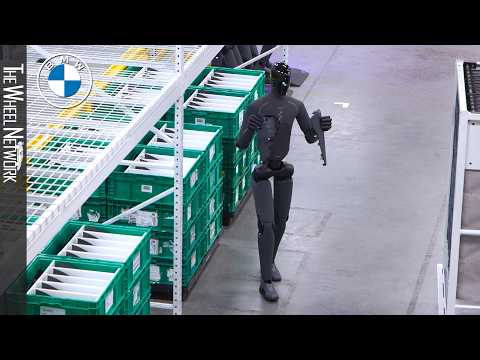
Figure AI Passes 1,000 Figure 03 Units as BMW Expands Logistics Deployment
Figure AI has manufactured its 1,000th Figure 03 humanoid at its BotQ production facility, marking a significant volume milestone for the California-based company. Earlier in 2026 the plant reached a sustained throughput of approximately one robot per hour, accelerating the transition from limited pilot builds to higher-rate serial production capable of supporting both internal data collection and external customer deployments.
At the same time, BMW Group is expanding the use of Figure 03 robots at Plant Spartanburg in South Carolina for complex logistics sequencing. The assignment follows a successful multi-month pilot with the earlier Figure 02 platform, which supported production of more than 30,000 BMW X3 vehicles by inserting sheet-metal parts in the body shop under real operating conditions.
In the new logistics role, Figure 03 robots pick unsorted components from larger containers and place them into sequencing trolleys in the exact order required for downstream assembly. The prepared trolleys are then moved by automated tugger trains or smart transport robots to the line, delivering parts just-in-sequence to human workers. BMW describes the task as frequent in automotive production and well suited to further scaling.
The Figure 03 incorporates hardware and software upgrades over its predecessor, including improved tactile sensing in the hands, palm-mounted cameras, refined whole-body coordination, and the Helix visual-motor AI system that enables continuous adaptation rather than purely scripted motion. These changes support more flexible handling of varied part geometries and orientations on a live factory floor.
Reaching the 1,000-unit mark at BotQ while simultaneously expanding a major automotive logistics deployment illustrates the dual track Figure is pursuing: building manufacturing capacity at industrial rates while generating continuous real-world data from customer sites. The combination is intended to accelerate both cost reduction and capability improvement for subsequent production batches.
Industry attention will focus on how consistently the one-per-hour production cadence can be maintained, how quickly the Spartanburg sequencing fleet grows, and whether the operational data returned from BMW and other early sites continues to improve task success rates and reduce the need for human intervention over successive software updates.

Over 2,000 Humanoid Robots to Compete at Beijing World Games
The second World Humanoid Robot Games will take place in Beijing from August 22 to 26, bringing together 2,056 robots from 666 teams across 16 countries. Participation has roughly quadrupled compared with the inaugural event held the previous year, underscoring the rapid expansion of the global humanoid development community and China’s central role as both host and dominant participant.
Chinese teams account for the large majority of entries, with 641 teams and 1,975 robots drawn from 157 enterprises and approximately 200 universities and research institutions. International participants include squads from the United States, Germany, Japan, and Brazil, the latter fielding a national team assembled from multiple RoboCup groups. The scale reflects both domestic industrial policy support and growing overseas interest in benchmarking humanoid platforms under competitive conditions.
The program features more than 30 events spanning athletic and scenario-based categories. New athletic contests such as long jump, weightlifting, tug-of-war, and table tennis have been added to stress motion control, structural strength, and component durability. Scenario-based challenges expand into simulated factories, hotels, homes, and logistics environments, testing practical skills including assembly, housekeeping, emergency response, and book sorting.
Competition rules have been tightened relative to the first edition. Time limits for distance races have been substantially reduced, and most track and field events now require fully autonomous execution. Organizers have indicated that many of the technical standards developed for the games are expected to influence practical industrial specifications as humanoid systems move from demonstration to deployment.
The event functions both as a public showcase and as a large-scale, multi-platform testbed. By placing hundreds of different humanoid designs under identical task conditions, it generates comparative performance data that individual companies or laboratories would find difficult to obtain in isolation, particularly across locomotion, manipulation, and long-horizon task completion.
As the games approach, attention will focus on which platforms demonstrate reliable autonomy under time pressure, how Chinese and international teams compare on both athletic and practical tasks, and whether any of the competition rules begin to translate into de-facto technical standards for commercial humanoid systems in the months that follow.
LG Partners with NVIDIA on Next-Generation Bipedal Humanoid
Isaac GR00T foundation model and Jetson Thor compute power a robot targeted for public unveiling in Q1 2027

LG has formalized a major partnership with NVIDIA to develop a next-generation bipedal humanoid robot built on the Isaac GR00T foundation model and powered by Jetson Thor onboard compute. The companies signed a memorandum of understanding at NVIDIA headquarters in Santa Clara, with LG Group Chairman Koo Kwang-mo and NVIDIA CEO Jensen Huang personally in attendance, moving the relationship from earlier strategic discussions into concrete, multi-year execution across both hardware and software layers.
The humanoid is scheduled for a public unveiling in the first quarter of 2027. It will run on NVIDIA’s open reasoning foundation model for humanoid control and incorporate the company’s full-stack Halos safety system for robotics. LG affiliates will supply core hardware components, drawing actuators from LG Electronics, sensors from LG Innotek, and battery systems from LG Energy Solution, creating an unusually integrated internal supply chain for a first-generation platform of this type.
Beyond the humanoid program itself, the agreement expands cooperation across three broad pillars: robotics, AI factories, and mobility. LG plans to validate its wheel-based CLOiD robots on active production lines, construct AI factory reference sites using NVIDIA computing platforms, and advance an AI-defined vehicle architecture based on NVIDIA DRIVE Hyperion technology for future mobility applications that share many of the same perception and control foundations.
The collaboration places LG among a growing group of traditional industrial and consumer-electronics conglomerates that are entering the humanoid race with established manufacturing scale, component expertise, and global distribution networks already in place. By pairing its own actuators, sensors, and energy systems with NVIDIA’s foundation models and high-performance edge compute, LG aims to compress the timeline from early prototypes to commercially relevant platforms capable of real operational cycles.
Industry observers note that the combination of a major Korean conglomerate’s manufacturing depth and NVIDIA’s robotics software stack could produce a competitive full-stack offering for both industrial logistics and service applications once the 2027 unveiling and subsequent validation cycles are complete and meaningful real-world deployment data begins to accumulate across multiple sites.
Further technical details on payload capacity, continuous runtime, total degrees of freedom, balance performance under load, and the initial target use cases are expected to emerge as the joint development program advances toward the planned early-2027 public demonstration and the pilot deployments that are expected to follow shortly afterward.

Unitree Prices Shanghai STAR Market IPO at 150.8 Yuan per Share
Chinese humanoid manufacturer Unitree has priced its Shanghai STAR Market initial public offering at 150.8 yuan per share, seeking to raise approximately 6.1 billion yuan, or about $904 million. The deal values the company near 61 billion yuan on a post-money basis and positions Unitree as the first major mainland-listed pure-play humanoid robotics firm to reach public markets at this scale and level of investor attention.
Retail demand proved extreme, with the offering oversubscribed by thousands of times and generating intense secondary-market interest even before official trading begins. Strategic placement investors include DeepSeek, which committed roughly 141 million yuan (approximately $20.8 million) and simultaneously entered a formal collaboration to co-develop multimodal AI models specifically tailored for humanoid hardware and embodied intelligence applications in real environments.
The DeepSeek partnership targets one of the central remaining bottlenecks in humanoid development: building robust “brain” models capable of interpreting unfamiliar physical environments and reliably translating high-level natural-language or goal-based instructions into precise, stable physical actions. Unitree will give preference to DeepSeek for model-training services and technical solutions, while DeepSeek will similarly favor Unitree platforms when exploring embodied-AI deployments and purchasing robots for research or commercial pilots.
Rival Chinese firms including AgiBot and Leju are also advancing toward public listings in Hong Kong and Shenzhen, reflecting broader capital-market enthusiasm for the humanoid sector as a whole. Global humanoid shipments multiplied significantly through the first half of 2026, with Chinese manufacturers accounting for the overwhelming majority of unit volume and continuing to expand both domestic and export channels at a rapid pace.
Unitree’s combination of demonstrated locomotion capability, existing profitability, and now substantial public-market capital is expected to accelerate both domestic production scale-up and intensified international competition. The listing arrives as Western and Chinese platforms increasingly compete on price, performance benchmarks, and real-world deployment readiness rather than laboratory demonstrations or short viral clips alone.
Investors, competitors, and industry observers will closely watch first-day trading performance and the subsequent allocation of raised capital toward large-model research, custom actuator development, expanded manufacturing capacity, and international market expansion in the months following the STAR Market debut and the release of detailed post-listing guidance.

China Fields a Broad Portfolio of Humanoid Platforms Across Multiple Niches
While many Western developers have concentrated resources on a relatively small number of flagship full-size platforms, Chinese manufacturers continue to field a wide and deliberately diversified array of humanoid systems optimized for different performance envelopes, price points, and end-use cases. Recent survey footage and public demonstrations highlight the breadth of this portfolio rather than the emergence of any single dominant design that is expected to serve every market simultaneously.
Platforms currently visible range from high-dynamic systems capable of martial-arts movements, flying kicks, and athletic feats to service-oriented machines trained for guided interaction, ballet-style locomotion, and structured household tasks. Others emphasize industrial endurance across multi-hour shifts, all-weather outdoor operation for inspection or rescue scenarios, or extremely low entry cost aimed at broader accessibility and educational or research markets around the world.
Examples circulating in recent coverage include robots demonstrating traditional sword forms alongside practical package-sorting capability, ballet-trained guide platforms progressing toward higher annual production targets, household systems performing unedited domestic chores in real environments, and compact walking humanoids priced low enough for individual or institutional experimentation and data collection. Additional machines focus on pressure-sensitive manipulation, continuous muscle-level work, and outdoor all-weather resilience under demanding conditions.
This parallel development approach allows Chinese firms to gather real-world operational data across many form factors and price tiers simultaneously. It also generates competitive pressure on both high-end Western platforms and lower-cost research or educational robots, as performance, reliability, and cost continue to improve across the entire spectrum rather than only at the premium or demonstration end of the market.
Observers note that the sheer number of active platforms—combined with rapid iteration cycles, deep domestic supply chains, and strong state-level industrial policy support—has shifted the competitive landscape from a contest among a few well-funded Western projects to a much broader, multi-layered race in which China fields numerous simultaneous contenders at different price and capability levels at the same time.
Whether this volume-and-diversity strategy ultimately produces clear commercial winners or a more fragmented market of specialized machines will depend on which platforms can demonstrate sustained economic value in factories, logistics hubs, public spaces, and homes over the next several real-world deployment cycles and multi-shift validation programs that are now underway across the sector.
Robotic Sorting System Hits 1,816 Parcels per Hour at 98%+ Success
Continuous live logistics challenge processes mixed shapes, sizes, and materials without interruption

A robotic sorting system has completed a continuous live logistics challenge, processing 1,816 randomly selected parcels in one hour with a success rate above 98%. The full run handled packages of different shapes, sizes, surfaces, and materials under real-world conditions without cuts or interruptions from the first parcel to the last, giving operators a clear view of sustained performance rather than isolated peak moments.
The demonstration was deliberately structured as an unbroken operational sequence instead of a series of short, curated clips. Viewers can evaluate how the system maintains speed, consistency, and adaptability across an entire hour of mixed incoming items—the practical test that matters most to logistics operators deciding whether to deploy automation on live sortation lines.
Purpose-built grippers were prioritised over complex five-finger dexterous hands, reflecting a deliberate engineering focus on high-throughput, cost-effective performance for actual warehouse deployment rather than general-purpose manipulation. The approach delivered roughly double typical human sorting rates on comparable tasks while sustaining high accuracy across varied package types.
Parcel sorting remains one of the clearest near-term commercial applications for advanced robotics in modern distribution centers. Success depends on reliable visual perception of diverse packaging, stable and gentle gripping across different materials and weights, and the ability to keep flow uninterrupted across long continuous periods without frequent human intervention or system resets.
The result sets a visible public benchmark for continuous, unedited logistics automation and reinforces the broader industry shift toward systems that can prove performance under realistic mixed-stream conditions instead of remaining confined to controlled laboratory trials or short demonstration windows.
Further multi-shift and multi-site deployments will determine how consistently these peak rates and success levels hold when lighting conditions, conveyor dynamics, package mix, and operational pressure vary across full production days and different facility layouts.
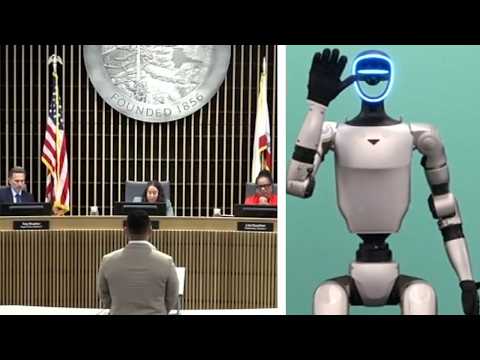
San Mateo County Moves to Regulate Commercial Humanoid Robots
San Mateo County, California, has become one of the first jurisdictions in the United States to pass a resolution aimed at regulating commercial humanoid robots. The Board of Supervisors unanimously approved the measure directing county staff to draft a formal permitting ordinance for robots deployed in workplaces across hospitality, logistics, customer service, and related settings.
The resolution addresses a clear regulatory gap that neither California nor federal agencies have yet filled. No comprehensive state or federal framework currently governs the commercial deployment and day-to-day operation of humanoid robots. Local officials argued that establishing rules early will support responsible integration of the technology rather than forcing the county to react after safety or labor problems emerge.
Key elements expected in the forthcoming ordinance include requirements for emergency kill switches that can cut power even if software fails, specialized fire-safety measures focused on lithium-ion battery thermal-runaway risks, trained on-site human supervision whenever a robot is operating, and systematic tracking of potential job displacement linked to each deployment.
Supervisor Ray Mueller, who authored the resolution, emphasized public-safety and accountability concerns as humanoids begin appearing in restaurants, warehouses, stores, and other workplaces. Permit fees collected under the new framework are intended in part to support specialized firefighting equipment needed for battery-related incidents.
The action positions San Mateo County as an early mover in local humanoid governance and may influence how other municipalities approach permitting, safety standards, and labor-impact monitoring as commercial deployments expand across the United States in the coming years.
Robotics companies, employers, and safety advocates will watch the drafting process closely to see how the final ordinance balances incentives for innovation with concrete operational safeguards and workforce-tracking requirements that could become a model for other jurisdictions.

AGIBOT A3 Combines Lifelike Movement with Real-World Deployment Focus
AGIBOT A3 has emerged as one of the more complete full-size humanoid platforms of 2026, combining fluid locomotion, AI-driven learning, advanced mobility, and practical deployment capabilities. Demonstrations show the robot dancing, walking, interacting with people, and executing structured tasks with notable precision, balance, and overall stability under varied conditions.
The A3 is positioned primarily for service and commercial environments rather than pure research or laboratory settings. Extended runtime, multimodal sensing, and fleet-oriented connectivity support use cases such as reception, exhibition guidance, cultural and tourism sites, and other public-facing roles that require both reliable mobility and a credible social presence.
Lifelike whole-body motion and responsive interaction help the platform move beyond the stiff, industrial gestures still common in many humanoids into more natural-looking behavior. At the same time, the underlying system is designed for real operational cycles rather than one-off performance clips, reflecting AGIBOT’s broader push into volume production and sustained field deployment.
As one of the companies leading global humanoid shipment volumes in the first half of 2026, AGIBOT continues to refine platforms that can transition from impressive demonstrations into sustained commercial service. The A3 series forms part of that effort to cover both high-visibility human interaction and practical task execution in everyday environments.
Observers note that the combination of expressive movement and deployment-ready features places the A3 among the more visible Chinese service humanoids currently moving toward broader real-world use, particularly in settings where appearance and social competence matter as much as raw task performance.
Further evaluation will focus on consistency across multi-hour shifts, robustness in varied public environments with changing lighting and crowd conditions, and how effectively the platform’s learning systems improve performance through ongoing field interaction data collected during actual deployments.