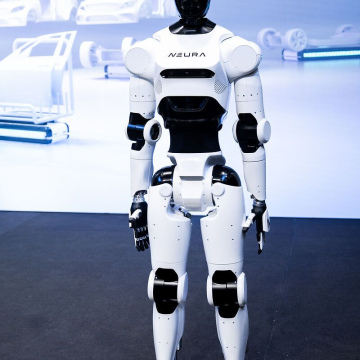
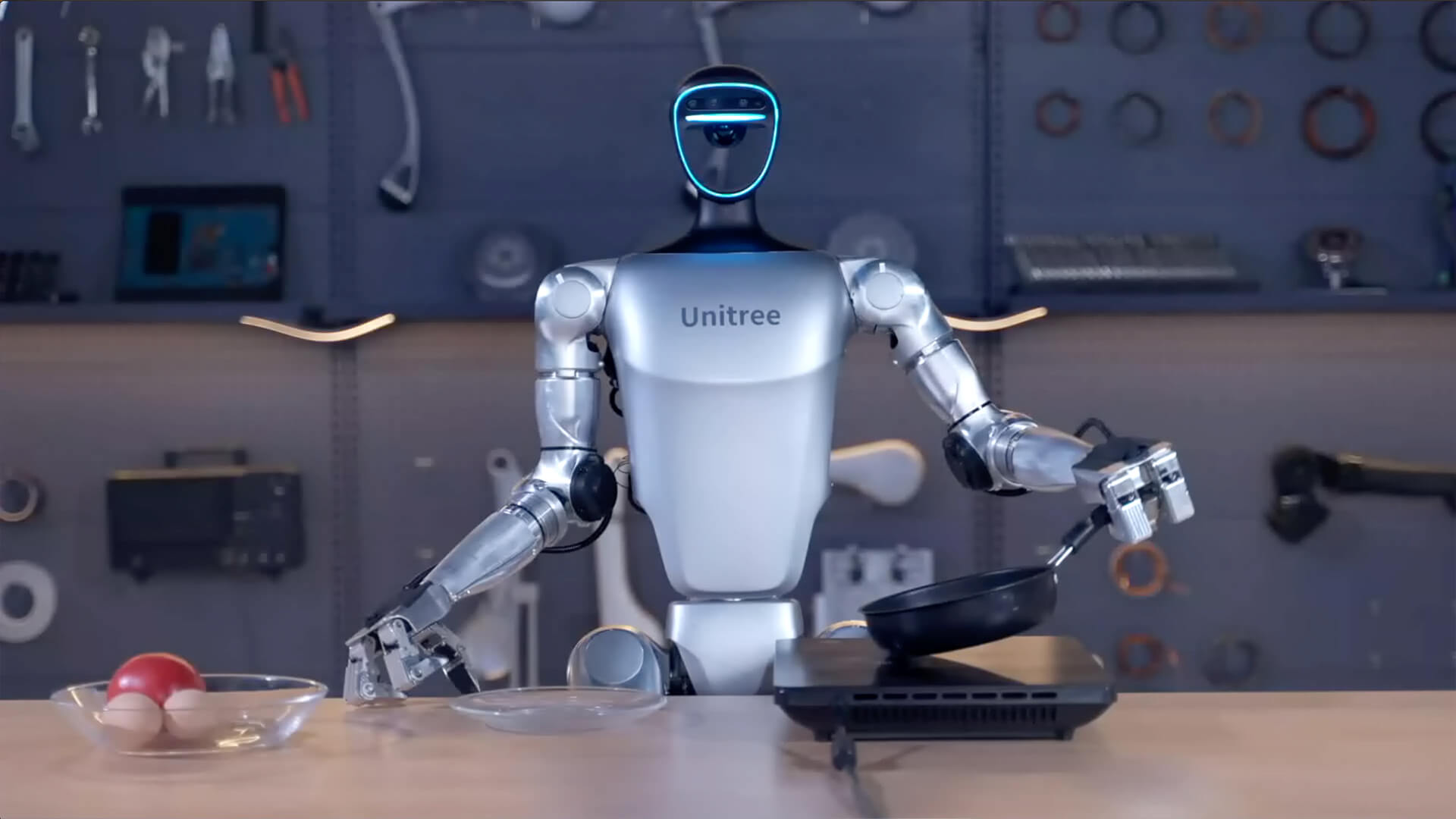
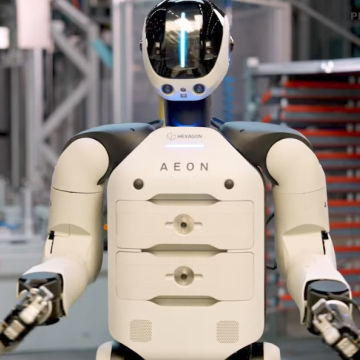
BREAKING NEWS • October 2026 UPDATE
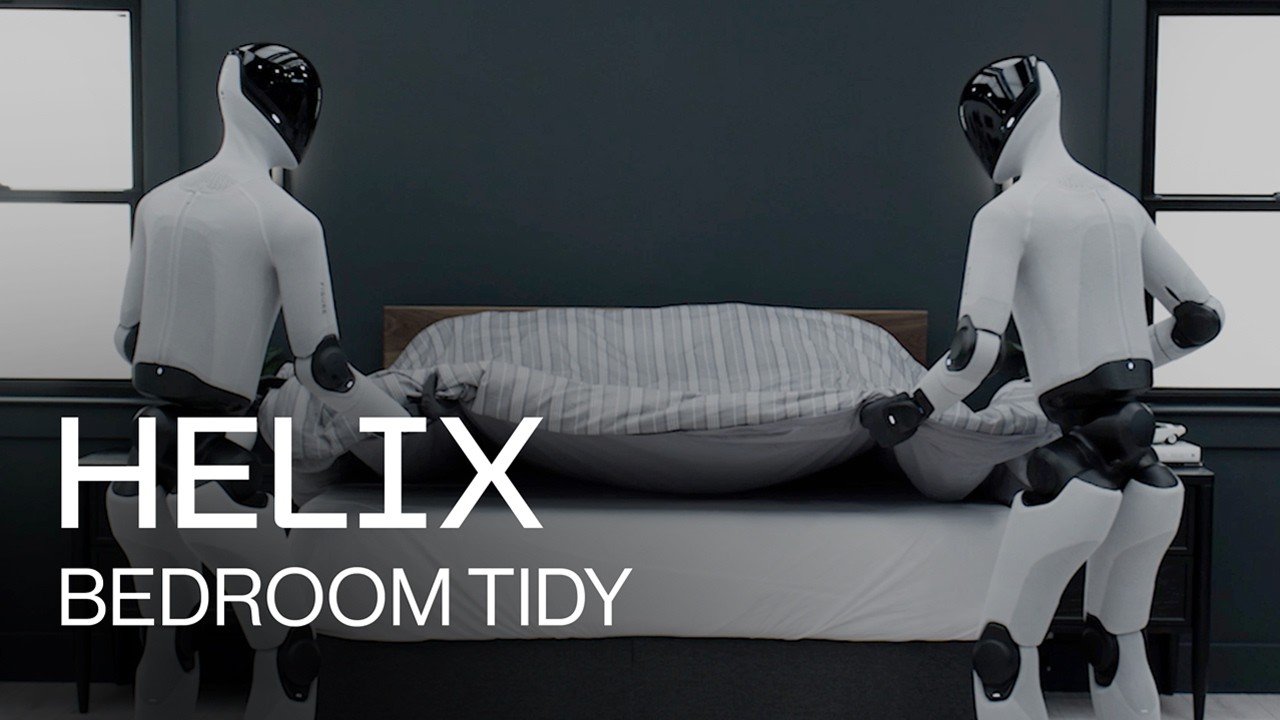
Source: Figure, 1X, AgiBot, Boston Dynamics, Unitree & industry reports, September 2026
🔴 LATEST HUMANOID ROBOT VIDEOS – October 2026
🔴 LIVE DEPLOYMENT TRACKER
Deployments by Region (2025-2026)
Market Analysis
Post-Games Reality Check: Robots Break Records, China Pushes Industrial Scale
September 1, 2026 — Days after the second World Humanoid Robot Games closed in Beijing, Tiangong Ultra (X-Humanoid) holds the 100 m mark at 8.64–8.86 s — well under Usain Bolt’s 9.58 s — while also clearing high-jump marks near 2.88–3.4 m. Over 2,000 robots from 666 teams competed across 51 events. The spectacle coincides with concrete commercial moves: Tesla’s Optimus line is now producing at Fremont, XPeng closed a $900 M round for IRON mass production by year-end, and Figure’s Index crowdsourcing platform has already logged 16 million real-world videos. Chinese makers continue to dominate volume (~97% of H1 global shipments).
Humanoid Robots Monthly News (October 2026)
World Humanoid Robot Games Post-Event Dominates Headlines, AgiBot Hits 20,000 Units, IDC Revises H1 Shipments to ~25,000, XPeng IRON Mass Production Ramp Accelerates, UBTech U1 Ships, Figure 03 Expands BMW Pilots
- Second World Humanoid Robot Games (Beijing, Aug 22–26) draw 2,056 robots from 666 teams; Tiangong Ultra runs 100 m in 8.64 s (faster than Usain Bolt’s 9.58 s human record) and sets multiple athletics marks including high jump over 3 m. (Nature / Global Times / Reuters, August 2026)
- AgiBot reaches 15,000 cumulative units by June and recently delivered its 20,000th robot (September 24 milestone to Chimelong Group at Hengqin Spaceship Park theme park) while completing live-tablet quality inspection tests on production lines. (Yicai Global / Robotico News / Sina News, June–September 2026)
- XPeng Robotics raises over $900 M at $6.3 B valuation to push IRON humanoid toward mass production by end-2026, targeting internal then commercial deployments in 2027 with new CEO oversight for scale-up. (Electrek, August 2026)
- Figure 03 continues paid industrial work including BMW Spartanburg parts sequencing and additional commercial logistics pilots; production past 1,000 units supports expanding fleet with new ladder-climbing demos. (Figure AI / The Robot Report, June–August 2026)
- Unitree completes mainland China’s first pure-play humanoid IPO on Shanghai STAR Market (Aug 19); shares surge hundreds of percent on debut amid strong H1 shipment position and volume targets of 10k–20k+ for 2026. (TechNode / CNBC / Forbes, August 2026)
- IDC revises global H1 2026 humanoid shipments to ~25,000 units (up sharply YoY); Chinese makers hold ~78% share, with industrial/commercial applications now dominant and volume leaders including AgiBot. (Hindustan Times / IDC / Yicai Global, September 2026)
- UBTech UWORLD U1 companion series (13,000+ company-reported orders) targets first consumer deliveries from mid-September 2026, now shipping with emotional AI for home companionship. (TechNode / SCMP / Humanoid.guide, July–September 2026)
- Boston Dynamics electric Atlas keeps all 2026 production committed to Hyundai RMAC and Google DeepMind; industry emphasis remains on multi-shift reliability and practical factory integration with new training center opened in Georgia. (Boston Dynamics / Industry trackers, 2026)
Humanoid Robots in History
A journey through the most groundbreaking moments in humanoid robotics
Honda Unveils ASIMO
When Honda pulled back the curtain on ASIMO at their Tokyo headquarters, the world witnessed something extraordinary. This wasn't just another robot—it was a 4-foot tall ambassador of the future, walking up stairs with an almost casual grace that made decades of robotics research suddenly feel worth it. Engineers had spent years perfecting the balance systems that let ASIMO navigate like we do, and watching it recognize faces and respond to voice commands felt like science fiction stepping into reality. The robot became Honda's technological pride, touring the world and inspiring a whole generation of researchers to push harder. What made ASIMO truly special wasn't just its technical specs, but how it made people believe that helpful humanoid robots in our homes and workplaces might actually happen someday.
Read more →Sony QRIO Demonstrates Running
Sony decided to tackle one of robotics' toughest challenges: making a humanoid robot actually run. QRIO was small, standing just two feet tall, but what it accomplished was huge. Running isn't like walking—both feet leave the ground, balance becomes critical, and one wrong calculation means a faceplant. Yet QRIO managed to hit speeds of 14 meters per minute, landing each step with precision that required incredibly sophisticated control algorithms. The robot could also recognize faces, respond to its name, and even dance, making it feel less like a machine and more like a companion. While Sony eventually discontinued the project, QRIO proved that dynamic movement was achievable and set the stage for the parkour-performing robots we'd see years later.
Read more →ATLAS by Boston Dynamics
The Fukushima nuclear disaster had shown the world that some situations are just too dangerous for humans. DARPA and Boston Dynamics answered with ATLAS, a 6-foot, 330-pound humanoid built specifically for disaster response. This wasn't meant to be cute or friendly—ATLAS was designed to go where buildings have collapsed, where radiation levels are deadly, where rescue workers can't safely tread. With 28 hydraulically-actuated joints, it could navigate rubble, turn valves, use tools, and even drive vehicles. The robot's sensor suite gave it incredible situational awareness, letting it perceive its environment in 3D and make decisions on the fly. ATLAS represented a shift in thinking about humanoid robots—not as companions or entertainers, but as life-saving tools that could operate in our most catastrophic moments.
Read more →Pepper Robot Introduced
SoftBank took a completely different approach with Pepper, designing a robot specifically to understand and respond to human emotions. Standing 4 feet tall with large, expressive eyes and a tablet on its chest, Pepper was built to work alongside people in stores, banks, and hospitals. What made Pepper revolutionary was its emotional intelligence—sensors analyzed facial expressions, voice tone, and body language to gauge how someone was feeling and adjust its responses accordingly. Within months, Pepper was greeting customers in hundreds of locations across Japan, answering questions, providing directions, and even cracking jokes. Thousands were eventually deployed worldwide, proving that people were ready to interact with robots in everyday settings. Pepper showed that the future of humanoid robots wasn't just about physical capability, but about social and emotional connection.
Read more →DARPA Robotics Challenge Winners
The DARPA Robotics Challenge Finals in California brought together the world's best robotics teams for the ultimate test. Teams had to complete eight disaster-response tasks: driving a utility vehicle, getting out and walking across rubble, opening doors, using power tools, turning valves, and more. Team KAIST from South Korea took the top prize with their DRC-HUBO robot, which could switch between walking on two legs and rolling on wheels for efficiency. The competition wasn't just about winning—it was about proving what was possible. Robots fell over, got stuck, and struggled with tasks humans find trivial, but they also succeeded in ways that seemed impossible just years before. The challenge sparked innovations in autonomy, perception, and manipulation that continue to drive the field forward today.
Read more →Atlas Shows Advanced Mobility
Boston Dynamics dropped a video that made the world stop and stare. There was ATLAS, trudging through snow-covered woods, opening doors with handles, picking up boxes, and—in the moment that went viral—getting shoved by a researcher with a hockey stick and catching itself before falling. The internet collectively gasped. This wasn't a carefully choreographed demonstration on a clean lab floor; this was a robot operating in the messy, unpredictable real world. The door-opening sequence was particularly impressive, showing ATLAS turn a handle, pull the door, and hold it while walking through—a complex series of actions requiring precise force control and spatial awareness. The video racked up millions of views and sparked debates about robot rights (should we be pushing them?) and capabilities (what else can they do?). It was a watershed moment that showed humanoid robots were becoming genuinely capable machines.
Read more →Sophia Gains Citizenship
Saudi Arabia made headlines worldwide by granting citizenship to Sophia, Hanson Robotics' humanoid AI robot. It was unprecedented—no country had ever given legal status to a non-human entity like this. Sophia, with her remarkably lifelike facial expressions and ability to hold conversations, had already become famous through TV appearances and conferences. But citizenship? That raised serious questions. What does it mean for a robot to be a citizen? Does Sophia have rights? Responsibilities? The decision was controversial, with critics calling it a publicity stunt and others seeing it as a forward-thinking recognition of AI's growing role in society. Regardless of where you stood, Sophia's citizenship forced the world to confront questions we'll increasingly face as AI and robotics advance. The stunt worked though—everyone was talking about robots, rights, and what personhood might mean in an age of intelligent machines.
Read more →Atlas Performs Parkour
Boston Dynamics released another jaw-dropping video, this time showing ATLAS doing parkour. Not walking. Not carefully stepping over obstacles. Parkour. The robot ran across platforms, jumped gaps, and landed backflips with a confidence that seemed almost showboating. Each movement required split-second decision-making, perfect balance, and incredible force control to stick the landings. The backflip alone was extraordinary—ATLAS had to generate enough rotational force, track its position mid-air, and time the landing perfectly. Engineers had developed new control algorithms that let the robot plan dynamic movements in real-time, adjusting on the fly to variations in the environment. Watching ATLAS move with such athletic ability was surreal; it was starting to move less like a machine and more like an athlete. The video went massively viral, showing that humanoid robots were rapidly approaching human-level agility in ways that seemed impossible just a few years earlier.
Read more →Boston Dynamics Robots Dance
In what became one of 2020's most-watched videos, Boston Dynamics showed ATLAS, Spot, and Handle dancing in perfect synchronization to "Do You Love Me" by The Contours. It was mesmerizing. The robots twisted, jumped, spun, and grooved with moves that were simultaneously precise and playful. ATLAS threw in spins and even did the running man, while the dog-like Spot bounced along and Handle glided around on wheels. The choreography required incredible control—each robot had to coordinate its movements with the others while executing complex, dynamic motions. More than just a technical demonstration, the video showed that robotics could be joyful, creative, even entertaining. It humanized these machines in a way that technical specs never could. The video earned tens of millions of views and became a cultural moment, reminding everyone that even as robots become more capable, there's still room for whimsy and fun in how we think about them.
Read more →Tesla Announces Optimus
Elon Musk took the stage at Tesla AI Day and unveiled something nobody saw coming: Tesla Bot, later renamed Optimus. A 5'8" humanoid robot weighing 125 pounds, designed to handle tasks that are dangerous, repetitive, or just boring. Musk's pitch was characteristically ambitious—Optimus would leverage Tesla's massive advantage in AI, computer vision, and manufacturing to build a general-purpose humanoid robot at scale. Unlike many robotics companies building small numbers of research platforms, Tesla aimed to mass-produce millions of units at accessible prices. The plan was to use the same neural networks that power Tesla's self-driving cars to give Optimus the ability to navigate and manipulate objects in the real world. Critics were skeptical—building humanoid robots is notoriously hard—but Musk had a track record of achieving seemingly impossible things. The announcement instantly made Tesla a major player in humanoid robotics and signaled that the technology was moving from research labs into serious commercial development.
Read more →Tesla Optimus Prototype Demo
Just over a year after the announcement, Tesla wheeled out an actual working Optimus prototype at AI Day 2022. Admittedly, it was early-stage—the robot walked slowly, waved to the crowd, and demonstrated basic tasks like watering plants and moving boxes in a video. But the fact that Tesla had built anything at all in twelve months was impressive. The prototype showed off custom actuators, battery packs integrated into the torso, and hands with 11 degrees of freedom capable of delicate manipulation. Musk acknowledged they had a long way to go but projected confidence that Optimus could eventually be produced for under twenty thousand dollars. The demo was polarizing—some saw a promising start, others saw an overhyped concept. Regardless, it proved Tesla was serious about humanoid robots and willing to pour resources into development. The bigger message was clear: the era of general-purpose humanoid robots was arriving faster than most people expected.
Read more →Figure 01 Unveiled
Figure AI burst onto the scene with Figure 01, a sleek humanoid robot designed explicitly for commercial work. Unlike research platforms, Figure 01 was built with real-world deployment in mind—warehouses, manufacturing facilities, retail environments where labor shortages were becoming critical. The robot featured impressive dexterity with articulated hands that could manipulate a wide variety of objects, from boxes to tools to fragile items. Figure AI attracted serious attention, securing partnerships with major companies and raising significant funding from investors betting that humanoid robots were about to become practical reality. The company's approach was pragmatic: start with structured environments where tasks are well-defined, prove the robots can be useful and reliable, then expand capabilities over time. Figure 01 represented a new wave of robotics startups focused on commercialization rather than pure research. With labor markets tight across industries and warehouse automation already proven by companies like Amazon, the timing seemed right for humanoid robots to finally move from labs into workplaces at scale.
Read more →