























A Danish robotics company is testing supervised humanoid shelf replenishment at a supermarket near Copenhagen, with independent overnight operation targeted for early 2027.

HIVE Robots Takes on Supermarket Restocking
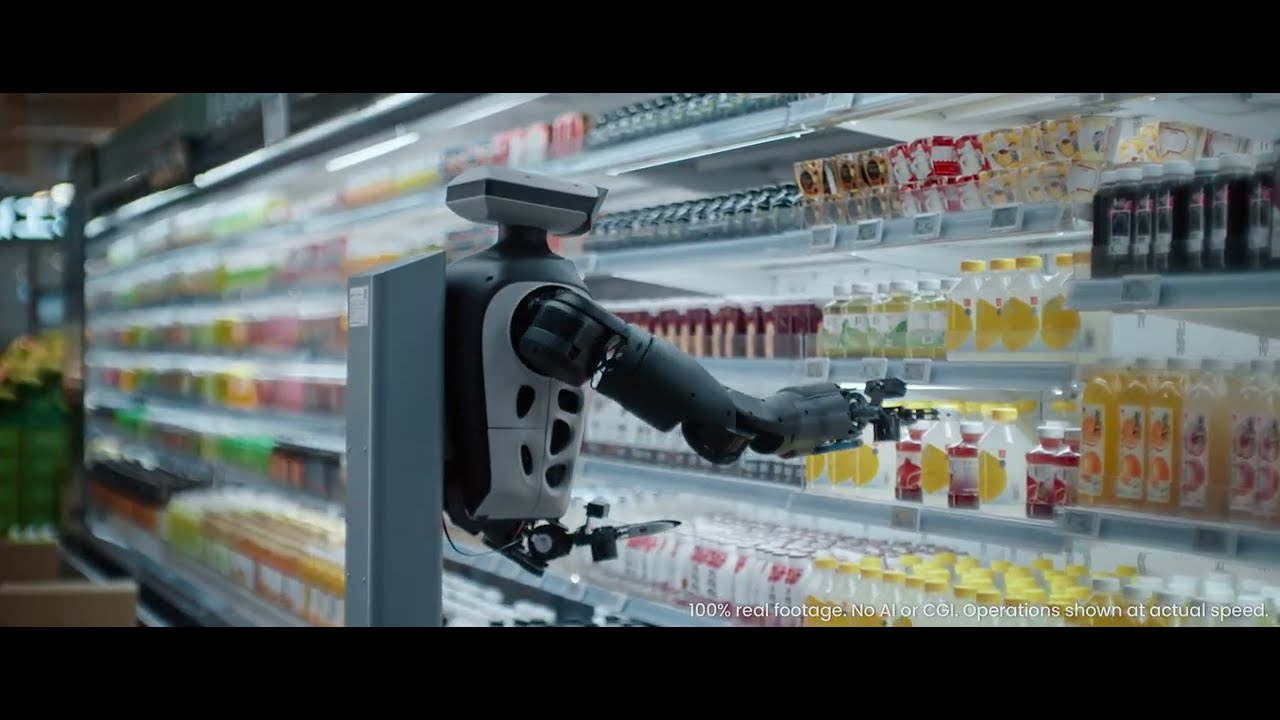
HIVE Robots is testing a humanoid robot for one of retail’s most repetitive tasks: restocking supermarket shelves. At a føtex store near Copenhagen, Denmark, a Unitree G1 is being trained to replenish products after the store closes, including pasta shown in the accompanying footage.
The trial focuses on a practical challenge for humanoid robotics. A robot must do more than walk through a store. It needs to reach different shelf heights, handle packaged products, position items accurately, and repeat those movements reliably in a real retail environment.
HIVE, a Danish robotics software and services company based in Kongens Lyngby, is developing the software and operating model behind the application. Rather than manufacturing its own humanoid body, the company works with existing robotic platforms and provides the software, remote-pilot support, and operational services needed to deploy them.
føtex, part of Danish retail group Salling Group, is providing a live supermarket environment for testing the technology outside a laboratory.
Training Now, Autonomy Targeted for 2027
HIVE and føtex announced their multi-year partnership on March 11, 2026. Training began in June, with human operators guiding the robot as it learns to handle products and navigate shelf configurations.
The companies’ stated ambition is to achieve independent overnight shelf replenishment by early 2027. That remains a target rather than a demonstrated result.
The distinction matters. The current footage shows a supervised training process, not proof that the robot can already complete an entire overnight shift independently. Human teleoperators can intervene when the system needs assistance, allowing the robot to continue working while its capabilities are developed and tested.
HIVE’s retail service model:
• Hourly robotics-as-a-service (no need for retailers to buy or maintain robots)
• Staff select products via a simple app using photos and shelf locations
• Future capabilities: empty-shelf detection, expiry checks, misplaced-product identification
Why Retailers Are Interested
Shelf replenishment is a repetitive but essential part of supermarket operations. According to figures attributed to føtex in reporting by Euronews, staff spend approximately 40 to 50 percent of their time filling shelves.
Automating some of this work could allow employees to spend more time assisting customers and handling tasks that require human judgment.
Heimdall and the Software Behind the Robot
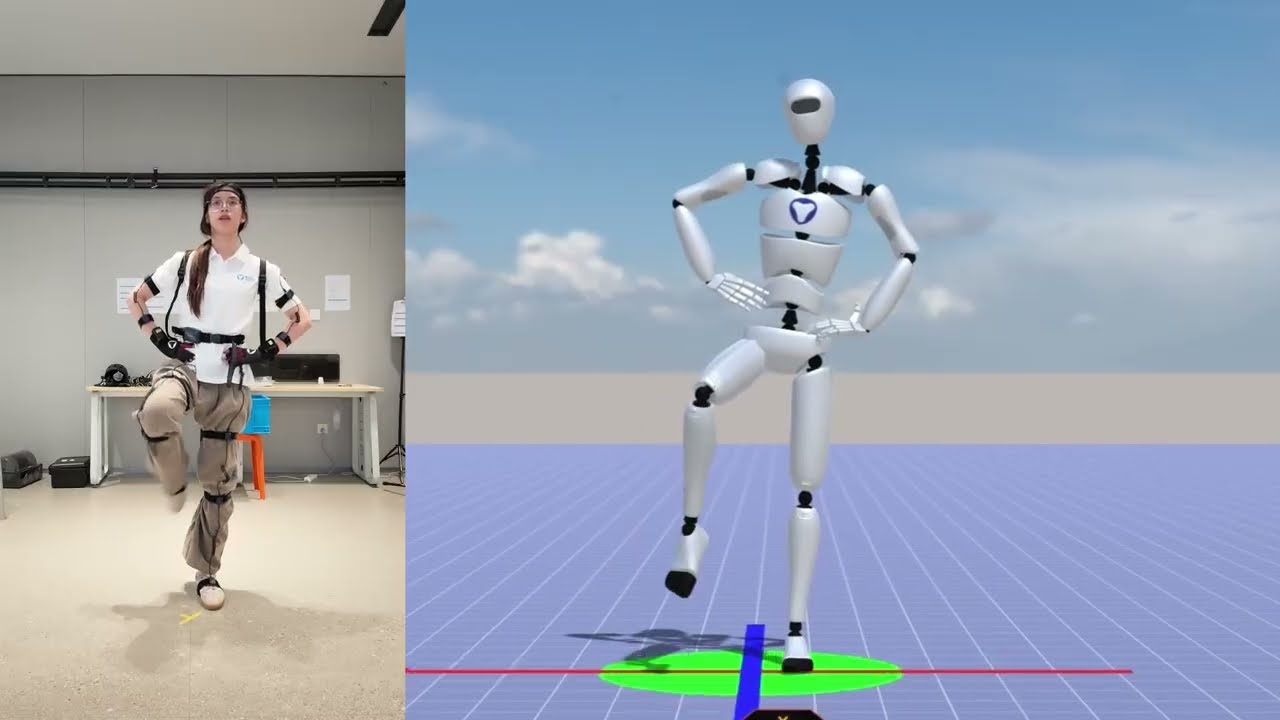
HIVE’s platform, Heimdall, supports robot operation, teleoperation, and data collection. When the robot encounters a task it cannot complete autonomously, a remote operator can intervene.
The experience gathered during operation can help inform further system development. The broader challenge is to develop control software that enables a humanoid to bend toward lower shelves, reach higher shelves, manipulate products, and maintain balance while working in confined spaces.
HIVE has also described its use of GPU infrastructure in Denmark for model training and European infrastructure for store data. These arrangements are relevant to retailers concerned about how operational video and other data are handled.
The company lists retail robot configurations around 140 and 180 centimeters tall. The robot featured in the footage is identified as a Unitree G1. Its performance in the trial will help illustrate how existing humanoid hardware can be adapted to a specific commercial task.
Beyond the Supermarket Aisle
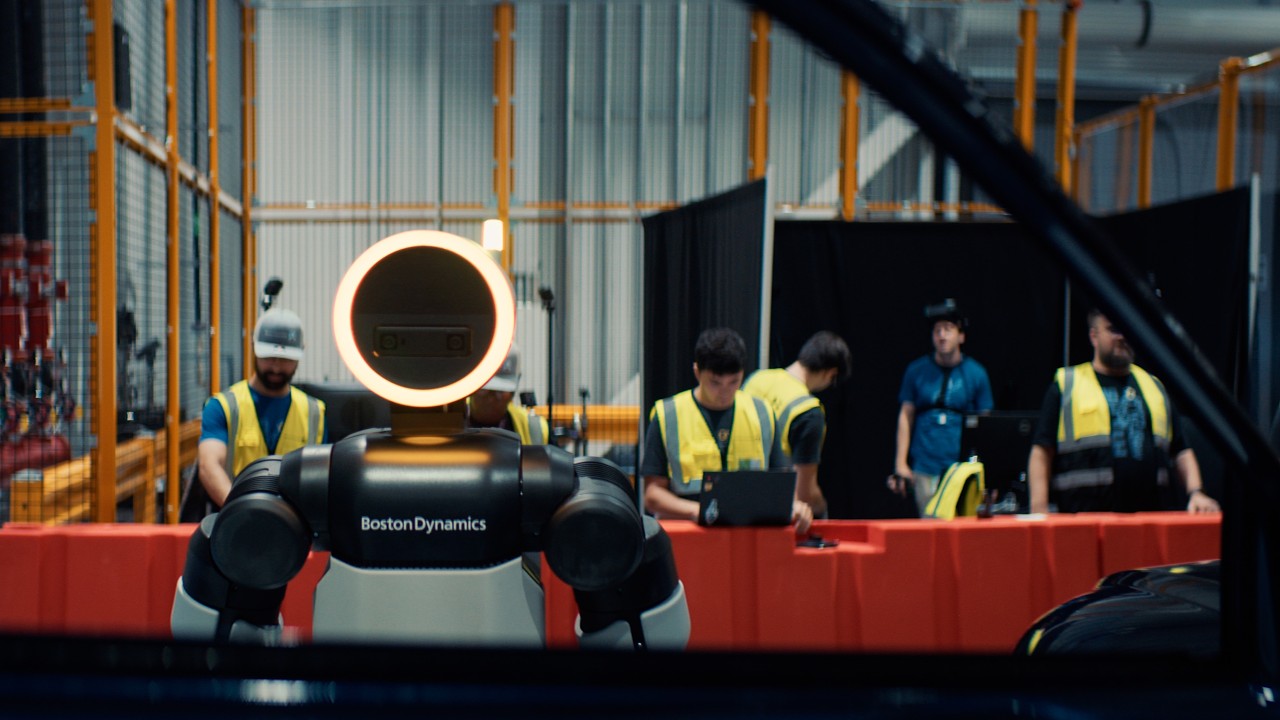
HIVE’s work extends beyond retail. Its leadership includes co-founder and CEO Charlotte Blou Sand and co-founder Jakob Sand. Jakob Welner, whose background includes work on the Atlas controls team at Boston Dynamics, joined HIVE as chief robotics architect in June 2026.
HIVE has also announced a partnership with Danfoss focused on five-finger grasping for industrial applications. The company has presented its supermarket-restocking work at NRF in Paris, bringing the application to a broader retail audience.
These initiatives reflect a wider shift in humanoid robotics: moving from demonstrations of walking and dexterity toward repeatable tasks in workplaces where reliability, safety, operating costs, and measurable productivity matter.
What Comes Next?
The føtex trial offers a useful real-world test of whether humanoid robots can take on routine replenishment work. Success will depend not simply on whether the robot can place an item on a shelf, but on whether it can do so consistently, safely, and at a commercially useful pace.
The early-2027 target for independent overnight replenishment is therefore an important milestone to watch. Before the technology can be considered a proven alternative to human shelf-stocking, it will need to demonstrate reliable performance across different products, shelf heights, and operating conditions.
For now, the story is about supervised training, a real supermarket environment, and a service model designed to make robotic labor available by the hour. HIVE and føtex are testing whether a commercially available humanoid platform can become a practical tool for everyday retail operations.